
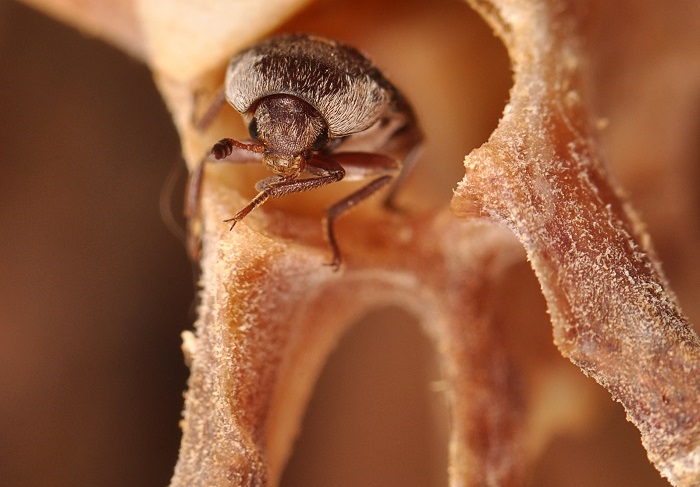
In the hidden corners of the natural world, a relentless and highly efficient workforce operates largely out of sight. These are the Dermestid Beetles for Sale – Kodiak Bones and Bugs, a family of insects known scientifically as Dermestidae. While many people encounter them as household pests or in the sobering context of a museum’s cleaning room, these beetles play a vital role in the cycle of life and death. They are nature’s premier scavengers, specialized in consuming the toughest organic materials that other decomposers often leave behind. Understanding why these creatures have evolved to feed on dead tissue and dry organic matter offers a fascinating glimpse into evolutionary specialization and the essential process of nutrient recycling.
The Evolutionary Niche of the Skin Beetle
The name dermestid is derived from the Greek words for skin and to eat, which perfectly encapsulates the primary diet of this insect family. Unlike many other scavengers that prefer moist, decaying flesh, dermestid beetles are uniquely adapted to consume dry animal matter. This includes skin, hair, feathers, wool, and even certain types of dried meats. By occupying this niche, dermestids avoid direct competition with more aggressive decomposers like blowflies or larger carnivorous scavengers that rely on fresher remains.
This specialization has made them indispensable in various ecosystems. When a carcass has been picked clean of its soft tissues by larger animals and the sun has parched the remaining scraps, the dermestid beetles move in. They are the final stage of the decomposition process, breaking down the complex proteins found in keratin and collagen. Without their intervention, the remains of animals would persist in the environment for much longer, locking away essential nutrients that need to be returned to the soil to support new plant growth.
The Life Cycle and the Hunger of the Larvae
While adult dermestid beetles are the most visible members of the species, they are not the primary consumers of organic matter. Most adult beetles in this family actually feed on pollen and nectar. The heavy lifting of decomposition is performed by the larvae. These larvae are often covered in dense, bristly hairs and possess incredibly strong mandibles designed for chewing through tough, fibrous materials. From the moment they hatch, their singular purpose is to consume enough protein to fuel their transformation into adulthood.
The larval stage is where the true power of the dermestid is revealed. These small creatures can eat several times their body weight in a single day, growing rapidly through several molts. Their digestive systems are remarkably robust, capable of breaking down chemical bonds in dried proteins that would be indigestible to most other animals. This intense metabolic activity is what makes them so effective at cleaning skeletal remains, a trait that has been harnessed by humans for centuries in the fields of taxidermy and forensics.
Precision Cleaning in Museums and Forensics
One of the most well-known uses of dermestid beetles is in the preparation of skeletal specimens for natural history museums. Traditional methods of cleaning bones, such as boiling or using harsh chemicals, can often damage the delicate structures of the skull or weaken the bone density. Dermestid beetles, however, offer a level of precision that no machine or chemical process can match. They carefully pick away every shred of ligament, tendon, and dried flesh without scratching or compromising the bone itself.
In the world of forensic science, these beetles provide a different kind of service. By analyzing the presence and growth stage of dermestid larvae on remains found at a scene, forensic entomologists can estimate the time of death with surprising accuracy. Since these beetles typically arrive at a carcass during the later stages of decomposition, their presence indicates that the remains have been exposed for a specific duration. This biological clock is a crucial tool for investigators trying to reconstruct the timeline of events in legal cases.
The Cultural and Ecological Significance
Beyond their practical applications in science, dermestid beetles represent a vital link in the chain of life. They remind us that in nature, nothing is truly lost. Every piece of organic matter is a container of energy that will eventually be repurposed. The beetles are the transition point in this cycle, turning the remains of the past into the building blocks of the future. Their role as the ultimate scavengers ensures that landscapes remain clean and that the soil remains fertile.
While they may not be as charismatic as the predators they follow or as beautiful as the butterflies that share their meadows, dermestid beetles deserve our respect for the essential work they perform. They are a testament to the power of evolutionary specialization and the complexity of the natural world. Whether they are cleaning a whale skeleton for a museum display or breaking down a small rodent in a forest, they operate with a quiet, efficient hunger that keeps the world in balance.


More Stories
Developing High-Impact Talent: The Importance of a Structured Emerging Leaders Training Program
Continuing Education Courses for Apprentice Electricians: What You Can’t Ignore
Where to Buy Peptides Safely: What Researchers Should Know